Validated Compostable Hot Melt Adhesive for Packaging Applications
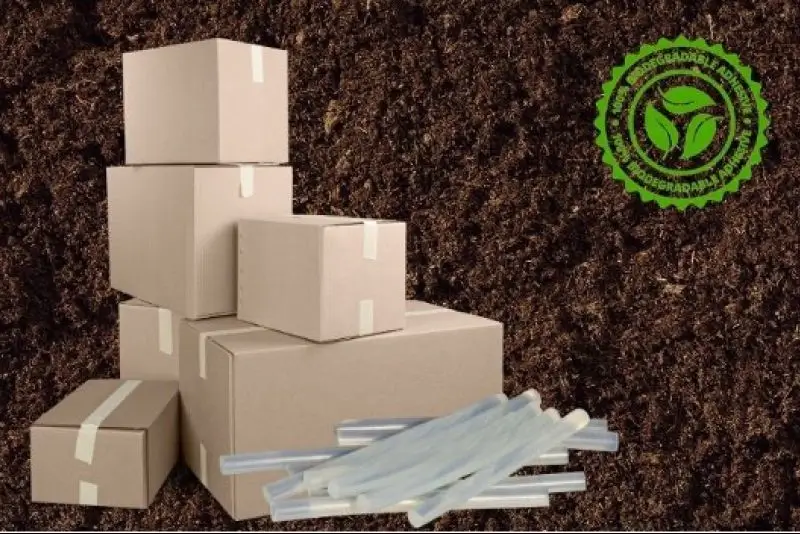
For many packaging companies, sustainability is no longer a side topic. It has become part of product development, customer expectations and long-term strategy. At the same time, more sustainable packaging only becomes valuable when it also works in practice. That is exactly why developments in compostable hot melt adhesives matter: not simply because they sound greener, but because they may help connect environmental ambition with real production requirements.
This page focuses specifically on a validated compostable hot melt adhesive direction for selected packaging and paper applications. It is not intended as a general overview of all biodegradable or compostable adhesives. Instead, it explains why this hot melt development is relevant, where it may fit, and why application-specific assessment still remains essential.
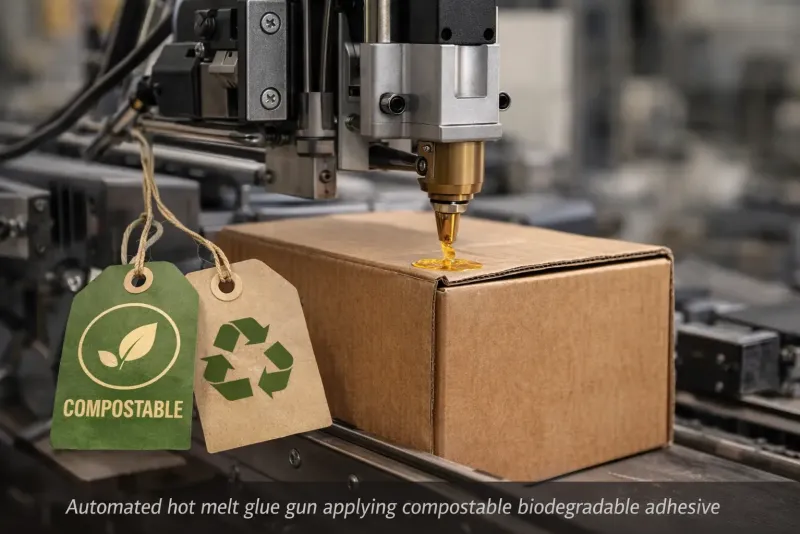
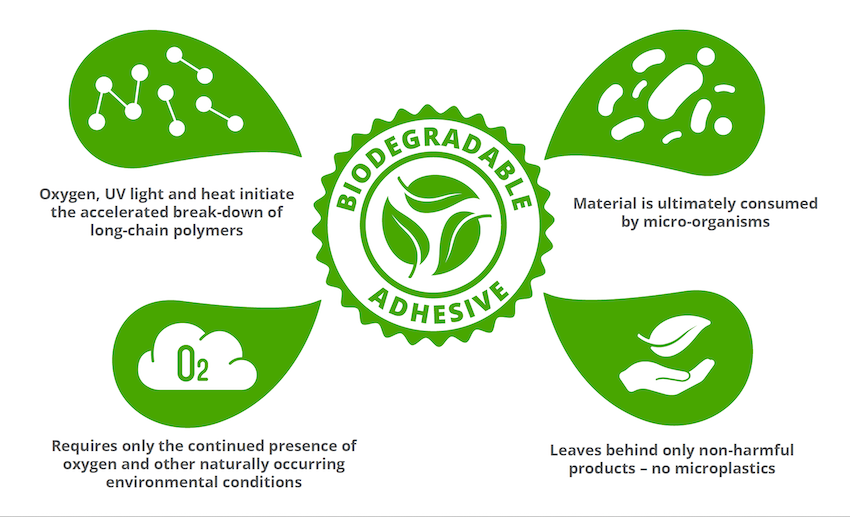
A key reason this development stands out is that it is presented as a 100% biodegradable and compostable adhesive and linked to recognized frameworks such as EN 13432, ASTM D6400, ASTM D6954 and ASTM D6866. The page also refers to a reported result of 94.05% degradation after 150 days under controlled composting conditions. These references matter because many sustainability claims in the adhesives market remain broad, difficult to compare or too general to support real technical decision-making. A more validated route creates a stronger starting point for packaging developers, converters and manufacturers who want more than a general green message.

That said, validation does not mean universal fit. It means the conversation can move forward on a stronger basis. In packaging and paper applications, the adhesive may only represent a small part of the total structure, but it can still influence whether a concept supports a compostability objective in a realistic and credible way. That is especially true in environments where machine conditions, line speed, bond performance, substrate behaviour and sustainability goals all need to work together. A compostable hot melt only becomes commercially meaningful when sustainability and industrial usability can move in the same direction.
If you want broader background on this technology family, you can also read more about biodegradable hot melt adhesive for sustainable packaging.
It is also important to be clear that not every compostable adhesive is a hot melt. Compostable adhesive solutions may exist in different technology families, depending on the application. These may include hot melt systems, pressure sensitive systems, heat seal systems or other application-specific adhesive routes. This page focuses only on the hot melt route, because that is the relevant context here. This distinction matters because it prevents confusion and helps ensure that the right adhesive family is matched with the right converting process, packaging format and performance requirement.
If you want a broader explanation of the terminology behind these solutions, visit our page on biodegradable and compostable adhesives.
This type of hot melt development is especially relevant in packaging and paper environments where manufacturers want a more sustainable bonding route while still requiring practical production performance. Examples may include selected paper-based packaging, selected food packaging constructions, takeaway packaging, boxes and paper converting applications, and packaging structures developed with industrial compostability in mind. The exact fit always depends on the total structure, but these are the kinds of applications where a validated compostable hot melt can become commercially and technically relevant.
Even with a validated development, not every packaging project is solved by one claim alone. Final suitability may still depend on the substrate combination, packaging format, machine setup, line speed, required bond profile, food contact requirements, end-use conditions and the total packaging design. That is not a weakness of the solution. It is simply the reality of adhesive selection in industrial applications. A validated route creates a stronger starting point, but practical fit still needs to be assessed case by case. This is exactly where technical guidance becomes important: not only to understand what has been achieved, but also to determine whether the adhesive direction makes sense for your exact application.
If you want to understand the broader strategic relevance of this development for packaging and paper, read compostable biodegradable hot melt for packaging and paper.
If your focus is on labels or tapes rather than hot melt bonding, you may also be interested in PSA adhesive for compostable labels and tapes.
For companies working on more sustainable packaging, this kind of development is important because it shows that compostable hot melt technology is not only theoretical. At the same time, success still depends on how well the adhesive matches the full packaging concept. In other words, the right next step is usually not to ask whether the adhesive sounds sustainable enough, but whether it fits your exact structure, process and commercial objective.
Working on a compostable or more sustainable packaging structure??
Share your substrates, packaging format and process conditions with us. Based on your application, we can help assess whether this validated compostable hot melt direction is a realistic fit for your project. Contact Us.
FAQ about compostable hot melt adhesives
1. What is a compostable hot melt adhesive?
A compostable hot melt adhesive is a hot melt bonding system developed for applications where compostability is an important objective, usually in relation to defined composting conditions and practical packaging requirements.
2. Is every biodegradable hot melt adhesive also compostable?
No. Biodegradable and compostable are related, but they are not the same. Compostable is a more specific category with stricter conditions and clearer end-of-life expectations.
3. Is this page about all compostable adhesives?
No. This page focuses specifically on a validated hot melt direction. Other compostable adhesive technologies may include PSA, heat seal or other application-specific systems.
4. Does a validated compostable hot melt automatically fit every packaging application?
No. Final suitability still depends on the substrates, process conditions, machine setup, bond profile and end-use requirements.
5. When is a compostable hot melt most relevant?
Usually when a packaging or paper project is being developed with compostability in mind, while still requiring industrial processability and practical hot melt performance.
What solution are you looking for?
We are specialized in the packaging and paper. Need the best products or advice? Then please leave your details and we will get in touch.